ServicesGutters
Gutter Installation and Repair in Alexandria, KY
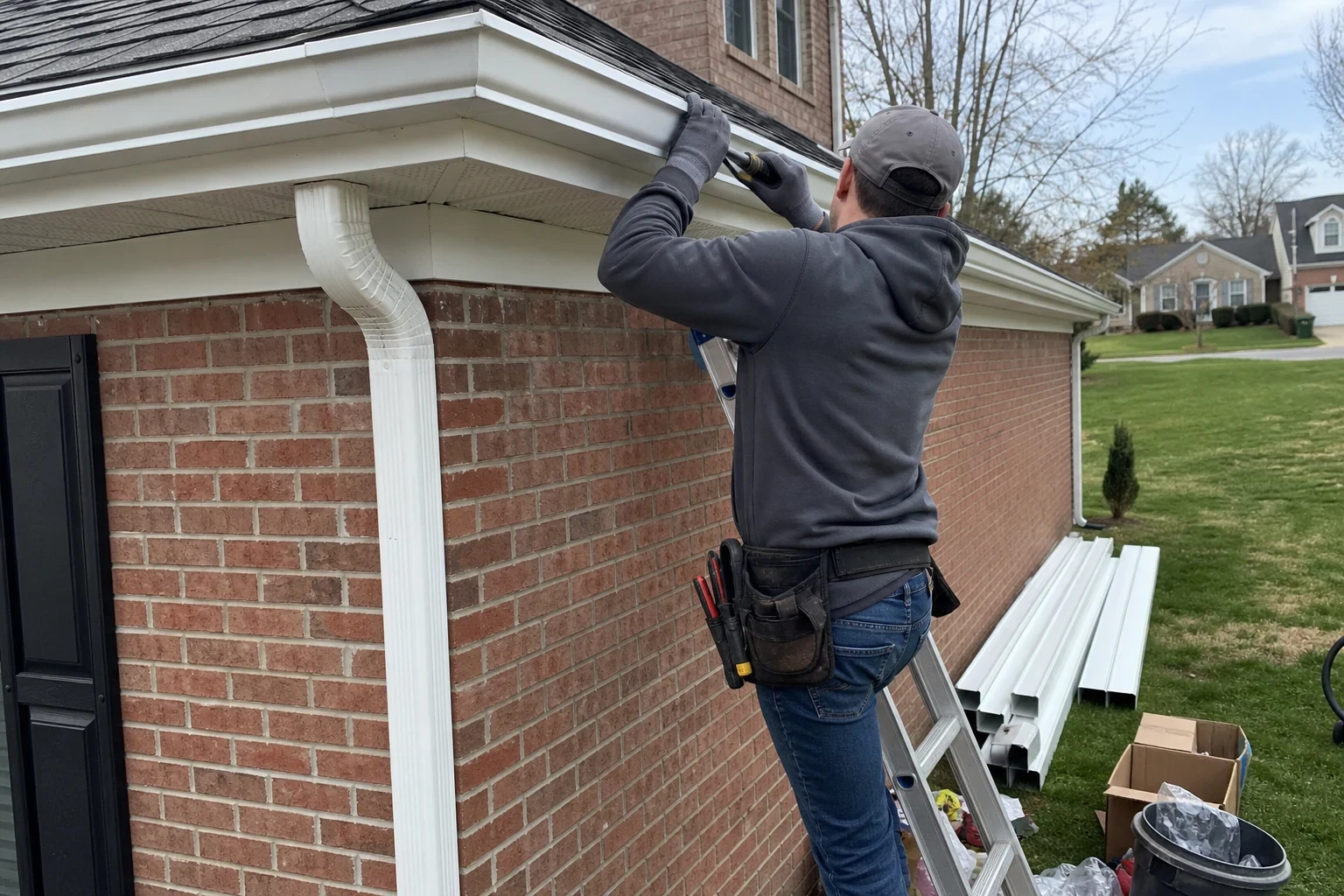
We measure your roof, size the gutters and downspouts to the water it actually sheds, and hang them on a true slope so nothing pools. Ladders are tied off, the work area stays clear, and you get a straight answer on repair or replacement.
What Your Gutters Are Supposed to Do
A gutter system has one job: catch the water coming off your roof and move it far enough from the foundation that it soaks in somewhere harmless. When a run sags, a seam opens or a downspout clogs, that water spills over the front edge, rots the fascia board behind it and saturates the soil along your basement wall.
We handle gutter repair and full replacement. Most new installs we do are continuous aluminum runs, formed on site in one piece from corner to corner, so the only joints are at corners and outlets. That matters because joints are where leaks start.
Safety shapes how we work on every job. Gutters sit at the roof edge, the most dangerous spot on a house to work from, often near the electrical service line. We plan ladder placement before anyone climbs, keep a person on the ground, and keep the area under the eaves closed off while overhead work is going on.
What a Gutter Job Includes
- Measuring roof runoff
- We look at each roof plane that drains to a gutter, plus its pitch. A steep, large plane can overwhelm a 5-inch K-style gutter in a hard rain, so we tell you when 6-inch with 3x4 downspouts is the better fit.
- One-piece runs formed on site
- Aluminum coil is run through a forming machine in your driveway and cut to the exact length of each eave. Fewer joints means fewer places for water to drip through.
- Hidden hangers and correct slope
- Hangers go in with screws into the rafter tails or solid fascia, usually about every two feet. Each run is pitched toward its outlet, roughly a quarter inch per ten feet, so water moves instead of sitting and freezing.
- Solid wood behind the gutter
- A screw only holds as well as the board it bites into. We test the fascia along every run for soft spots ahead of mounting anything, photograph any rot we find, and replace those sections so the new gutter is not anchored to wood that will give out next season.
- Downspouts and discharge
- We place downspouts where they can carry water away from walkways and the foundation, then add extensions or splash blocks. If you already have underground drain lines, we connect to them and check that they flow.
- Cleanup with a magnet sweep
- Old gutters, spikes and screws come down and leave with us. We run a magnetic sweeper over the lawn and driveway so nobody steps on a stray fastener.
Signs Your Gutters Need Attention
Water sheeting over the front
Overflow at the outer lip during rain traces back to a few causes: debris choking the outlet, a gutter too small for the roof above it, or a slope that runs away from the downspout. We pin down which one before recommending a fix.
Sagging or pulled-away runs
Old spike-and-ferrule systems loosen as the spikes back out of the wood. A run that drops away from the fascia is also a hazard to anyone below it.
Peeling paint or dark streaks on fascia
Staining behind the gutter usually means water is getting between the gutter and the board. Left alone, that wood softens and the soffit can follow.
Ice buildup along the eaves
Northern Kentucky winters swing above and below freezing, and gutters that hold water turn into ice troughs. The weight bends hangers, and icicles hanging over a doorway are a real danger.
Washouts or a damp basement
Eroded mulch, a trench under a downspout or a wet foundation wall points to water being dumped too close to the house.
What Moves the Price of Gutters
Gutter work is priced mostly by the linear foot of gutter and downspout, but the number on your estimate depends on what we find on your house. We list each item separately so you can see where the cost comes from. No add-ons show up after the work starts without a conversation first.
Gutter size and footage
A larger 6-inch profile paired with 3x4 downspouts takes more aluminum per foot than the standard 5-inch gutter with 2x3 outlets. Long runs and many corners add both material and labor.
Height and access
A two-story eave, a steep slope in the yard or a run over a deck takes more setup to do safely, and that time is part of the job.
Fascia condition
Rotted fascia or rafter tails need replacing before new gutters can hold. We cannot always see the full extent until the old gutter is off, and we show you what we find.
Guards and extras
Gutter guards, extra downspouts, underground drain connections and color choice each add to the total. We explain which ones your trees and roof actually call for.
How the Work Day Runs
- 1
Free estimate on site
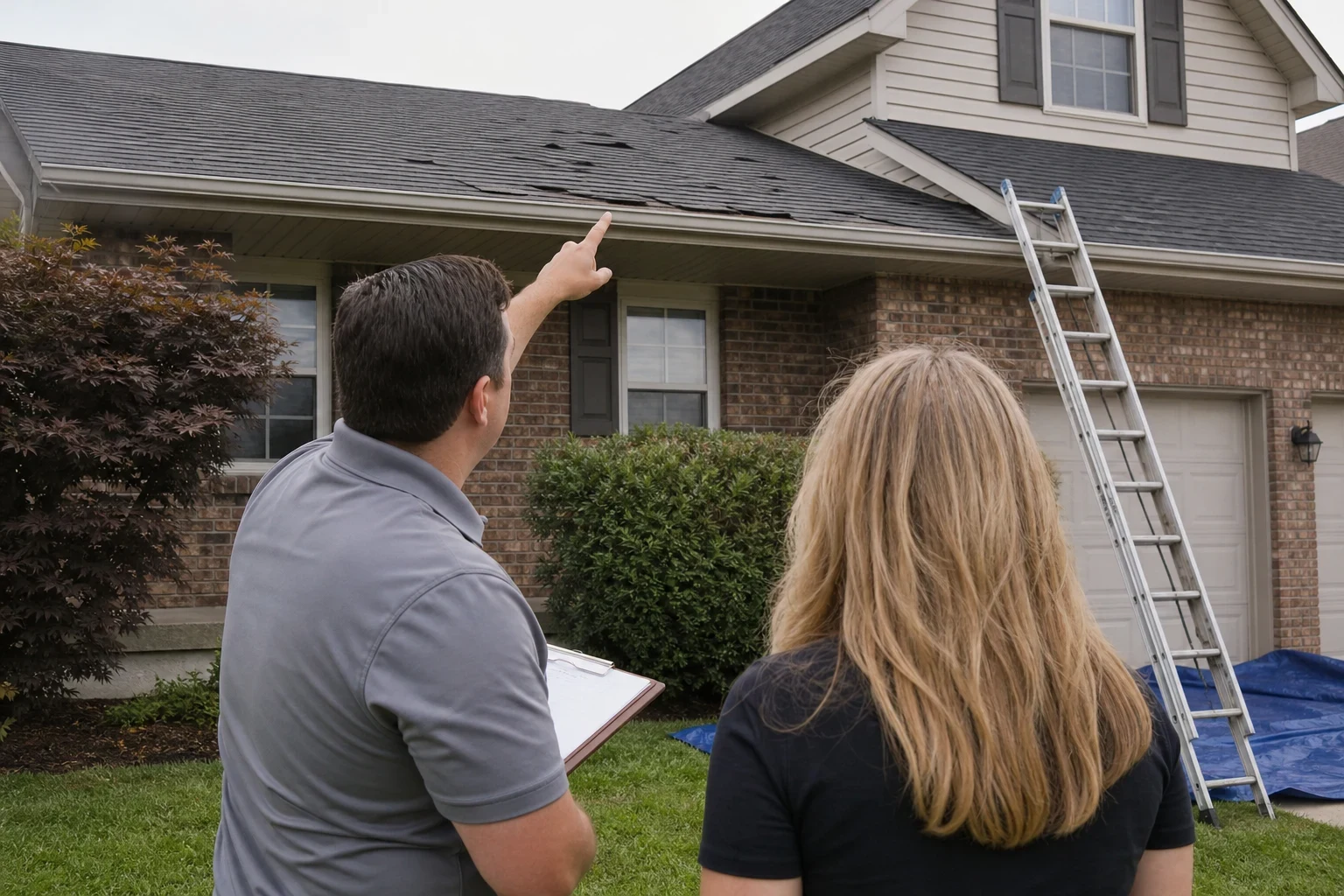
We walk around your home and check hangers, seams and fascia from the ground and from a ladder, photographing anything that needs work. The estimate we leave breaks the job down line by line, along with our honest view on whether a repair will hold or the system should be replaced.
- 2
Setting up a safe work zone
We locate the service drop and any wires near the eaves first. Ladders go on level footing with standoffs so they bear on the wall, not the gutter. While we work overhead, we ask that children and pets be kept clear of the eaves we are working under.
- 3
Removal and wood repair
Old gutters come down in sections, lowered by hand rather than dropped. Any soft fascia gets cut out and replaced before anything new is attached.
- 4
Forming and hanging
Runs are formed to length, end caps and outlets are sealed, and each section is hung and checked for slope with a level. We run water through every run before we call it done.
- 5
Walk-through and cleanup
We sweep and magnet the yard, haul off the old material, and walk you around the house to show where each downspout drains.
Gutter Questions We Hear Often
Should I go with 5-inch or 6-inch gutters?
It depends on the roof area and pitch draining into each run. Many homes do fine with 5-inch, but large or steep roof planes and long runs with one outlet often overflow them in a heavy storm. We measure and tell you which runs need the larger size.
Are gutter guards worth it?
If you have mature trees dropping leaves and seeds onto the roof, guards can cut down how often someone has to climb up and clean. They are not maintenance-free, since fine debris still builds up on top. We will tell you plainly if your lot does not need them.
Is a repair enough, or do I need all new gutters?
In many cases a repair holds up fine. Resealing a leaking corner, re-hanging a sagging run or clearing a blocked downspout makes sense when the rest of the system is sound. When the slope is wrong along the whole length or the fascia behind it is failing, new gutters are the better use of your money.
Do I need to be home during the install?
It helps to be there at the start so we can confirm downspout locations and where water should go. After that you can come and go. We do ask that the driveway area near the forming machine and the ground under the eaves stay clear while we work.
Does new gutter work affect my roof or siding?
Gutters attach right where the roof edge, drip edge and siding meet, so we check all three. If we see lifted shingles or damaged siding near the eaves, we note it with photos and can talk through roof repair or siding work separately.
Get Water Moving Away From Your Home
We will look at your gutters, fascia and downspouts, show you what we see, and give you a written estimate. The visit and the estimate cost you nothing.