ServicesSiding
Siding Repair and Replacement for Alexandria Homes
We fix and replace vinyl and fiber cement siding, and we check what is behind the panels before giving a price. Wet sheathing, gaps in the house wrap and poor window flashing get pointed out and repaired, while kids and pets stay safe in a yard we keep under control.
How Siding Work Fits Your Walls
The siding you see is only the outside of the wall. Under it are the house wrap, the flashing at doors and windows, and the sheathing fastened to the studs. Expensive siding problems usually begin in those covered layers, often after water slipped past a split panel or an unflashed opening and soaked the wood.
Repairing a few spots is enough when only some panels are cracked, loose or torn off and the wall behind is dry. Replacing everything makes more sense when panels have turned brittle across entire sides of the house, when water damage keeps appearing in new places, or when no wrap was ever put under the old siding. We tell you which applies to your home and show you photos that explain it.
What Comes With Our Siding Work
- Stripping to the sheathing
- Old panels, trim and starter strip come off so the wall is in plain view. We never cover wood we have not inspected.
- Repairing rot and sheathing
- We cut out and replace OSB and plywood that is soft or coming apart. We also probe the sill plate and the base of the wall near the ground, where splashing water rots wood first.
- Wrap and flashing
- The weather barrier is lapped like shingles, upper layer over lower, so water drains out rather than in. Doors and windows get flashing tape and head flashing, and kick-out flashing goes wherever a roof edge meets a sidewall.
- Panels hung with room to move
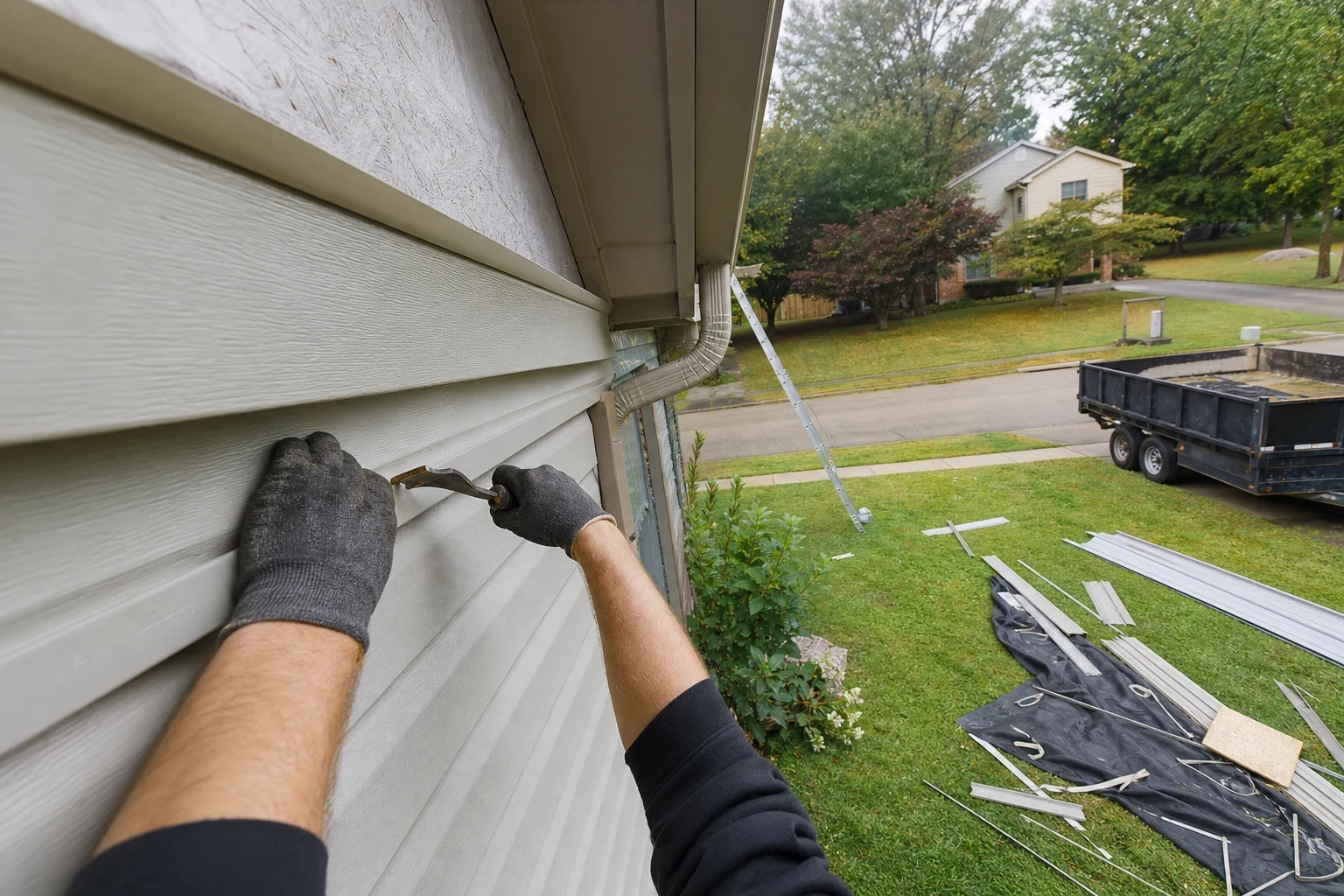
- Vinyl grows and shrinks as temperatures change, so each nail goes in the middle of its slot with the head left loose enough for the panel to slide. Fastened tight, vinyl warps in summer and splits in winter.
- Trim, soffit and fascia
- We fit J-channel, corner posts, soffit and fascia wrap so they shed water and keep birds and bugs out of the eaves.
When Your Siding Needs a Look
Wavy or swollen panels
Rippled vinyl usually means nails were driven too tight or moisture has swelled the wall behind it.
Splits and holes
Hail, stones thrown by mowers and knocks in cold weather crack vinyl, and every gap lets blowing rain get to the wrap.
Streaks under windows
Dark marks or flaking paint beneath a sill suggest the flashing at that window is missing or has failed.
Spots that give under your hand
A panel that flexes or a wall that feels soft can mean the sheathing underneath is wet or rotting.
Peeling interior paint on outside walls
Blistered paint or damp drywall on an exterior wall may mean water is moving inward through the wall cavity.
Faded, chalky siding
A heavy chalky film means sunlight has worn down the surface, and vinyl in that state often cracks in the next hard freeze.
What Drives Siding Prices
We price siding by the square footage of wall it covers, but the total hinges on what is hiding behind the old panels and how safely we can reach each wall. The estimate itemizes every part so the cost is easy to follow. If we uncover hidden damage, you see photos before we do anything extra.
Which material
Vinyl is cheaper to buy and put up. Fiber cement weighs more, needs more labor and requires paint, but it handles impact and heat better.
How sound the walls are
Rotted sheathing, a soft sill plate or framing damaged by water means more labor and material. A house built without house wrap needs it installed on every wall.
Reaching the walls
Two-story gables, walkout basement walls or a sloped yard call for scaffolding rather than ladders, and that takes longer to set up.
Openings and trim
Each window, door, vent and hose bib gets its own flashing and trim, so a wall full of openings costs more than a blank wall the same size.
How a Siding Job Runs
- 1
Free estimate on site
We walk every side of your home, lift panels where we can, and photograph what we find. You get a written estimate that separates siding, trim, wrap and any sheathing allowance.
- 2
Setting up a safe work zone
Ladders are footed and tied off, and scaffolding or pump jacks go on level, solid ground. We mark off the drop zone below the wall we are working and ask that kids and pets stay clear of it. We keep tools and panels away from the electric meter and service lines.
- 3
Tear-off and wall repair
We remove one elevation at a time so your home is never open on every side. On older houses we treat painted trim as if it could contain lead, laying plastic sheeting and bagging debris instead of sweeping it into the grass.
- 4
Wrap, flash and install
New barrier and flashing go on, then starter strip, panels and trim. Each wall is closed up before we move on or before rain is expected.
- 5
Cleanup and walk-through
We run a magnet sweeper across the lawn, beds and driveway for nails and staples, then walk the job with you and point out any repaired framing.
Siding Questions Homeowners Ask Us
Can a patch blend in with my current siding?
Sometimes. Manufacturers drop vinyl colors and profiles regularly, and sun-faded panels rarely match a fresh one even from the same line. We bring samples and tell you honestly how close it will look. When it won't blend, one option is to move original panels from a back wall to the front and put the new ones somewhere less noticeable.
Should siding and a roof replacement happen at the same time?
It often saves work. The step flashing and kick-out flashing that tie the roof into the sidewall get built right once when both jobs run together. If your roof is getting old, mention roof replacement while we are out for the siding estimate.
Does homeowners insurance cover hail-damaged siding?
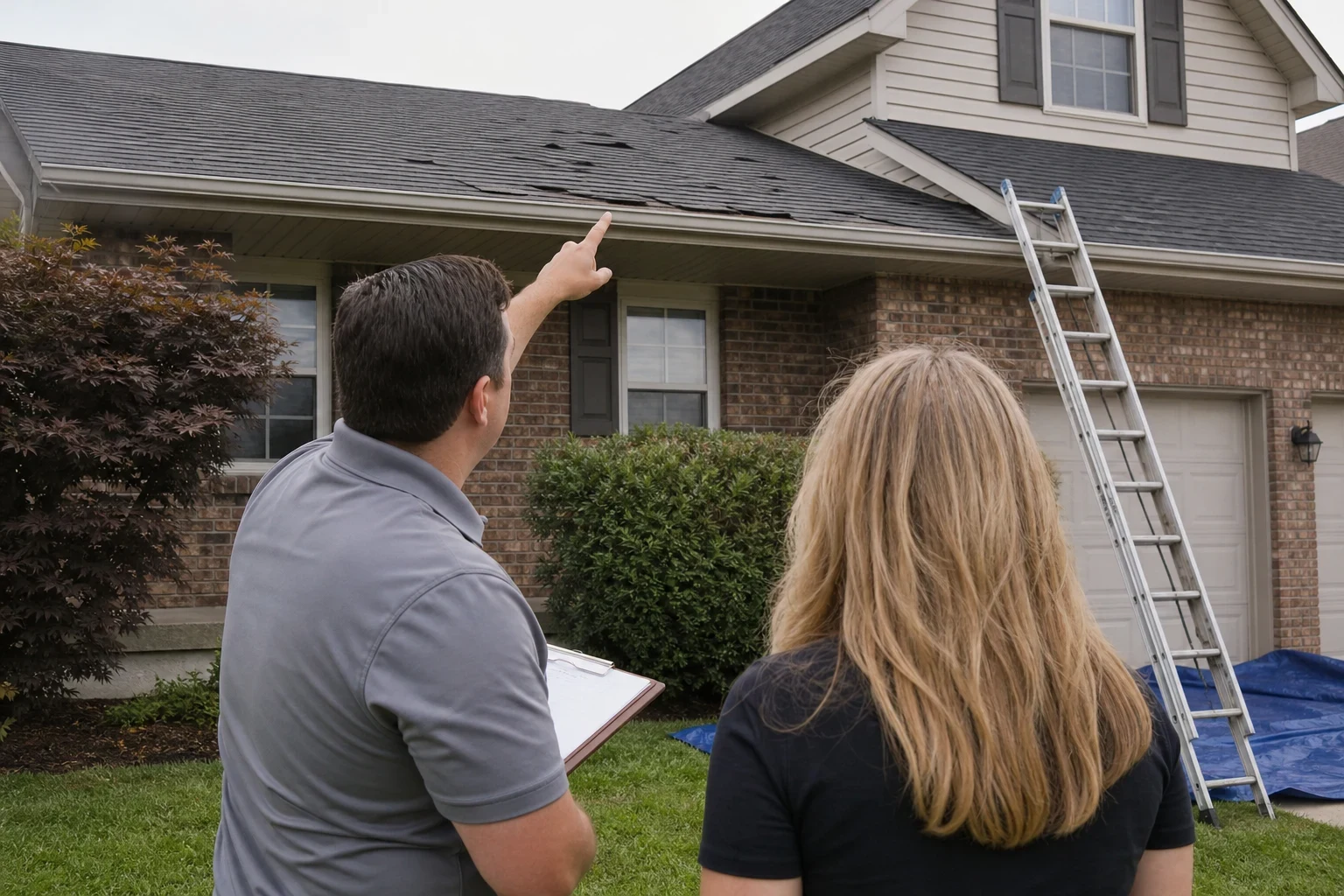
Many policies cover siding hit by wind or hail, but that decision belongs to your insurer and its adjuster. We document the damage with photos and measurements you can hand to them. Our storm damage repair page explains how we help.
Is it safe to strip siding off an older house with children at home?
Yes, with the right setup. We mark off a drop zone, lay plastic to catch debris, bag anything coming off old painted surfaces and sweep for nails every day. We also plan around nap times or a backyard where the kids play before starting.
Can new siding go right over the existing siding?
It can be done, but we rarely recommend it. A second layer conceals rot, thickens the wall so window and door trim stops lining up, and traps moisture in between. Taking the old siding off lets us fix the wall instead of guessing about it.
Find Out What Is Behind Your Siding
We go wall by wall, check the sheathing and flashing underneath, and leave you a written estimate backed by photos. Ask about our Limited Time — $50 Off Your First Service Call.