ServicesRoof Replacement
Roof Replacement in Alexandria, KY, With Safety Planned Before Tear-Off
When a roof is past repair, we strip it to the deck, fix what is underneath and build it back layer by layer. Before the first shingle comes off, we plan how the crew stays safe up top and how your family stays safe below.
When Replacement Is the Right Call
Asphalt shingles wear out in a predictable way. Heat and UV dry out the asphalt, the granules wash into the gutters, and the mat underneath gets brittle. Once that happens across most of the roof, patching one area just moves the leak to the next weak spot. A new roof is often the cheaper choice over the next decade.
We only recommend replacement after we have been on the roof and in the attic. If a repair will hold, we tell you, and our roof repair page covers that work. If it won't, you get a clear explanation of why, with photos of the shingles, flashing and decking we looked at.
Every replacement we build is detailed for freeze-thaw cycles and ice backing up at the eaves, both common in Northern Kentucky winters, so the new roof keeps water out in January as well as July.
Everything in a Full Replacement
Tear-off down to bare wood
Every existing layer comes off, including a second layer of shingles installed over the first. Only bare decking reveals soft spots, rot near vents and old nail damage.
Replacing bad decking
We cut out plywood and OSB that is soft or separating and put in new sheets. Shingles fastened to weak decking loosen and ripple, so this gets fixed before anything else goes on.
Ice barrier and underlayment
A self-sticking ice and water membrane covers the eaves, valleys and penetrations, where snowmelt tends to back up. The rest of the deck gets synthetic underlayment as a backup against wind-driven rain.
Fresh flashing, drip edge and pipe boots
Step flashing at walls, chimney flashing, drip edge and pipe boots are all replaced rather than reusing worn metal and split rubber. On newer roofs, leaks usually begin at flashing rather than shingles.
Balanced attic ventilation
We compare soffit intake with ridge exhaust. Without enough airflow, an attic bakes the shingles from below in summer and frosts the nails in winter.
Cleanup every day and a final magnet pass
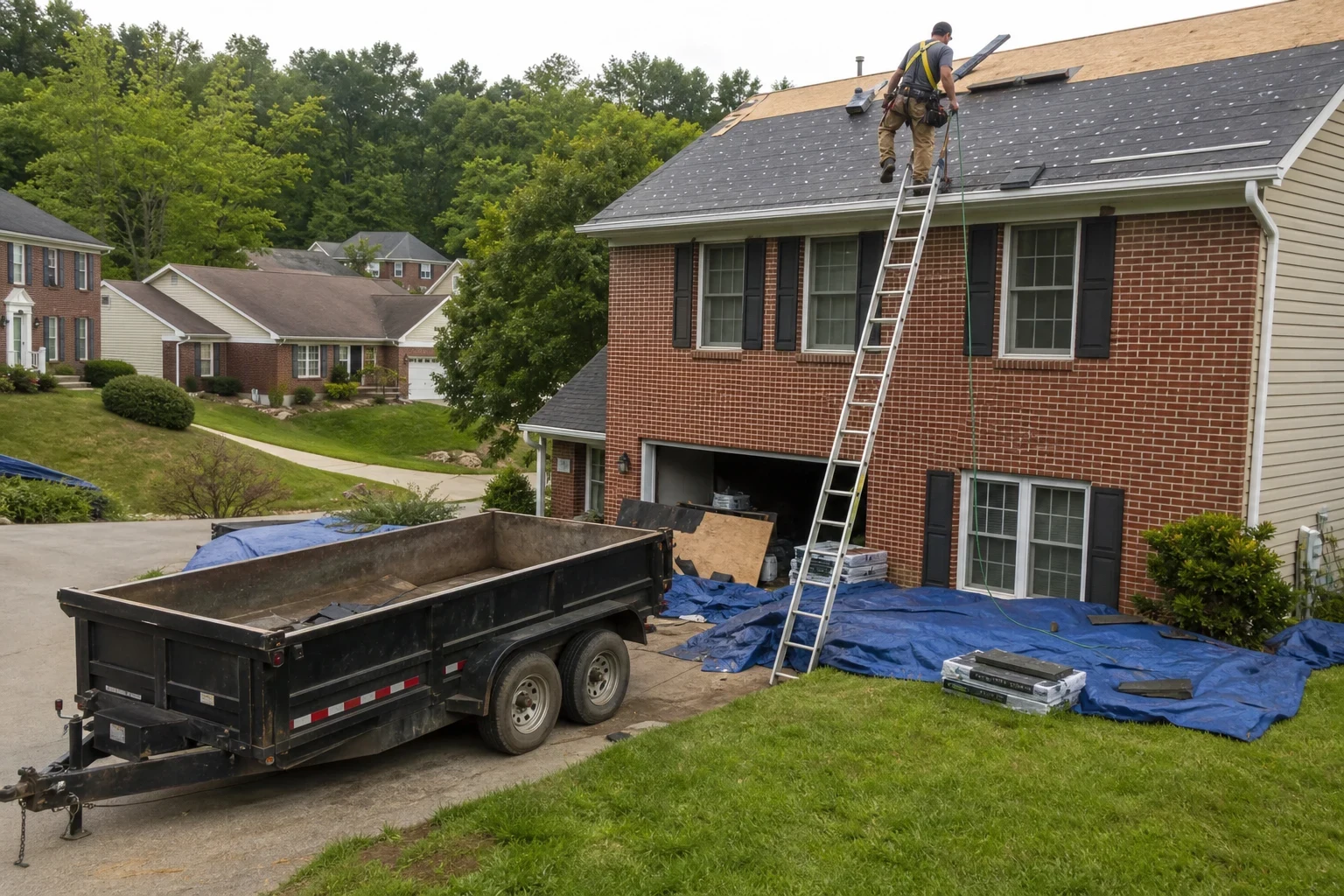
Debris drops directly into a dumpster or trailer, never your flower beds. A rolling magnet goes over the lawn, driveway and walkways to collect stray nails.
When It Is Time for a New Roof
Curled or cupped shingles
Lifting edges or sunken centers show the asphalt has dried out. Curled shingles catch the wind and split when it gets cold.
Grit at the downspouts and bare spots
Each shingle's mineral coating shields the asphalt from the sun. Piles of that grit at downspout outlets, or dark worn patches on the slopes, mean little protection remains.
A roof that sags
A dip between rafters typically signals decking that is wet and weak. It is also a safety concern, so we check it from the attic before anyone steps on it.
Leaks in several places
A single leak may be a flashing fix. Stains in multiple rooms, or fresh leaks after each repair, show the whole roof is giving out.
Light or moisture in the attic
Daylight between boards, damp insulation or dark stains under the deck mean water and air are coming through the roof.
What Happens on a Replacement Job
- 1
Roof and attic check, then an itemized estimate
We begin on the roof and in the attic, then look at the gutters, measure every slope and photograph our findings. The estimate spells out the shingle, underlayment, flashing and ventilation work, plus the number of decking sheets we expect to replace.
- 2
Safety setup on site
Ahead of tear-off, we install roof anchors and harness lines, secure ladders and mark a drop zone. Shrubs and AC units get covered, and we ask that kids, pets and cars stay out of that zone during the work.
- 3
Tear-off and decking repair
We remove the roof one section at a time so the house is never exposed to weather. Damaged decking is swapped out as we go, and any surprises are shown to you before we repair them.
- 4
Dry-in and shingle install
Ice barrier, underlayment, drip edge and flashing go down first, followed by shingles nailed in the manufacturer's pattern. Ridge vent and cap shingles complete the roof.
- 5
Cleanup and final walk-through
We magnet-sweep the yard, haul off the old roof and walk the finished job with you. You also receive photos of the work, including the layers now hidden from view.
What Sets the Price of a New Roof
We price a roof from its measurements and from what we see on it, so we don't quote from the driveway. Each part of the job gets its own line, and you can see exactly where the money goes. Replacement decking is priced per sheet ahead of time, so rotted wood never turns into a surprise on the final bill.
- Roof size and pitch
- Square footage sets the material count. Steep pitches need more fall protection and slower work, which adds labor.
- Layers to remove
- Two layers of old shingles mean twice the tear-off and disposal. Weight and labor both go up.
- Decking condition
- Sound plywood costs nothing extra. Rot near valleys, chimneys or old leaks adds sheets, and we can't know the full count until the deck is bare.
- Shingle line and details
- Architectural shingles cost more than three-tab. Chimneys, skylights, dormers and valleys each add flashing work.
- Ventilation and permits
- Adding ridge vent or soffit intake adds cost but protects the new shingles. We include any required permit in the estimate.
Questions About Replacing a Roof
Something not covered here? (859) 279-2442
Can new shingles go on top of my current roof?
We advise against it. A layover hides soft decking and worn flashing and adds weight to the rafters. The new shingles also run hotter and wear out faster. A tear-off lets us fix what is underneath before the new roof goes down.
How long will the replacement take?
Most single-family roofs take one to three days. A steep pitch, two layers to remove or heavy decking repair can add time. We open only as much roof as we can dry in that same day.
Should I be home, and is my family safe during the job?
You do not have to be there, but please keep kids, pets and vehicles out of the marked drop zone. Debris goes into a dumpster or trailer, and we sweep for nails every evening, not just on the final day.
What if it rains in the middle of the job?
We track the forecast and plan the work around it. Before we leave, any open section is covered with underlayment and tarps so the house stays dry through the night.
Does insurance pay for a roof replacement?
It may if a storm caused the damage. We can document what we see and explain how the process works, and our storm damage repair page has more. The coverage decision belongs to your adjuster.
Can you put on new gutters during the same job?
Yes. Taking gutters down during a reroof makes it simple to install new drip edge properly, and our gutters page describes that work.
Find Out Where Your Roof Stands
We'll climb up, check the attic and show you photos of what we found. If replacement makes sense, you get a written estimate and a safety plan for the job. Serving Alexandria, Cold Spring, Fort Thomas, Independence and nearby.